
Tooth Extractions – Raleigh, NC
Removing Severely Damaged Teeth to Improve Oral Health
At Dalton Hunt Dentistry, we do everything we can to ensure our patients are able to enjoy complete and healthy smiles throughout their lives. However, in some cases, like those where a tooth is damaged or decayed beyond repair, we may recommend a tooth extraction in Raleigh to minimize the spread of the problem. So, while it may mean losing one of your natural teeth, this treatment can also help preserve your surrounding healthy pearly whites. To learn more about this emergency dental service, including what the recovery process entails, call our office today or read on!
Why Choose Dalton Hunt Dentistry for Tooth Extractions?
- Same-Day & After-Hours Emergency Dental Visits
- An Experienced & Compassionate Dental Team
- Save with Our In-House Membership Plan
Reasons Why Tooth Extractions Are Necessary

We typically recommend extracting a tooth in the following situations:
- Gum disease has eroded the supportive structure of a tooth, causing it to become loose.
- A baby tooth refuses to fall out on its own.
- An infection has become so severe that it is no longer treatable with a root canal.
- Room needs to be made in your mouth prior to orthodontic treatment.
- A previously treated tooth is causing you pain and cannot be retreated.
The Process of Removing a Tooth

Whether we’re removing one tooth or several, the first step of the process is always the same: to numb your mouth thoroughly. Then, once you’re ready to begin, your emergency dentist in Raleigh will grip the tooth, rock it loose, and remove it from the socket (this is known as a “simple extraction”). Before you leave our office, we will also provide you with a list of aftercare instructions to help you stay comfortable throughout the healing process.
Tooth Extraction Aftercare

In an effort to make the recovery process as smooth and seamless as possible, we will provide you with aftercare instructions. A few general ones include:
- Taking prescribed or OTC pain medication as directed
- Placing a cold compress against the outside of your cheek
- Changing the gauze pads as needed
- Eating only extremely soft foods, like applesauce and plain yogurt
- Brushing and flossing carefully around the extraction site
- Avoiding strenuous exercise, like running
Around the three-day mark, any swelling, sensitivity, or discomfort you’re experiencing should start to subside. If your symptoms seem to be getting worse or you develop a fever, then you should contact our team at Dalton Hunt Dentistry immediately.
Understanding the Cost of Tooth Extractions

You should confirm your tooth extraction’s price before you get the treatment itself. Doing so ensures your care will fit your budget, providing you with an affordable procedure. With that said, the cost of a tooth extraction in Raleigh varies; you’ll need to consult our dentists in person for an exact estimate. We’ll then work with you to make your treatment cost-effective, all while outlining helpful payment options. If you’d like more details, please keep reading or call us soon.
Factors That Can Affect Tooth Extraction Cost
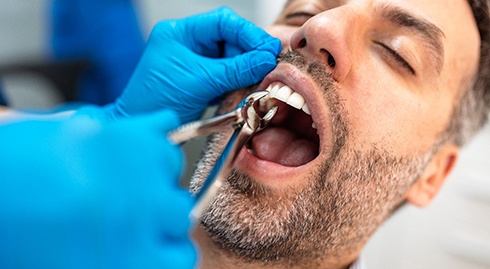
At your initial consultation, our team will assess the tooth (or teeth) that need removal. This process reviews various factors that affect your treatment cost, including:
- Final Tooth Number – The number of teeth we remove will affect the final price. Indeed, your treatment cost will rise as the tally increases.
- Complexity of Treatment – An extraction’s cost partly depends on whether the final treatment is simple or complex. A simple extraction often has a low price, while a complex one can get rather costly.
- Type/Location of Tooth – Depending on your tooth’s type and location, the extraction cost could be low or high. Removing front teeth is less pricey than extracting back ones, for example.
- Tooth Replacement Options – The treatment cost will rise if you get replacement teeth after extraction. Furthermore, this price increase will vary by whether your restoration is a denture, dental bridge, or dental implant.
Does Dental Insurance Cover Tooth Extractions?

Most dental insurance plans cover tooth extraction. In fact, the average policy views the removal work as medically necessary; it’ll thus meet up to 50% of the final treatment price. Just note that you’d have to meet your plan’s deductible first to enjoy the benefits.
That being said, exceptions to the above also exist. Your own policy may have limited extraction coverage, only cover certain teeth, or lack any benefits at all. You should thus confirm your plan’s details before you commit to treatment.
How to Make Tooth Extractions Affordable

A tooth extraction can certainly be affordable without dental insurance. To make it so, just rely on our practice’s helpful payment options! Any one of these methods could potentially make your care budget-friendly.
For instance, you could try our flexible financing program. This option lets you work with CareCredit – a reputable 3rd party lender – to pay for a treatment in manageable, monthly installments. Through it, you could divide the cost of your extraction into bundles you can handle.
Getting rid of a “bad” or failed tooth shouldn’t make you “break the bank.” Instead, please visit us – we’ll ensure your extraction fits your financial needs!
Tooth Extractions FAQs
Does Getting a Tooth Extracted Hurt?
One of the most common concerns that patients tend to have regarding tooth extractions in Raleigh is whether the procedure will be painful. Rest assured that our compassionate team will focus on keeping you as comfortable as possible throughout the process. Your mouth will be numbed with a local anesthetic, so while you may feel some pressure, there shouldn’t be any sharp pain.
It’s normal for your mouth to be somewhat sore after a tooth extraction. As long as you follow the provided aftercare instructions, you should be able to keep your discomfort under control and ensure that the healing process goes smoothly.
Any post-treatment discomfort should gradually fade as your mouth heals. If the pain seems to grow worse instead, please inform us immediately.
Can I Leave the Space Empty After a Tooth Extraction?
While there are multiple ways to replace an extracted tooth, some patients wonder whether simply leaving the gap empty is a viable option. However, this can have serious consequences for your oral health. Without a full set of teeth, you may find it harder to chew your food properly; this can have a negative impact on digestion. On top of that, when there’s empty space in your smile, your remaining teeth will start to drift out of place, potentially causing serious alignment issues.
For the sake of your oral health, you should have an extracted tooth replaced as promptly as possible. Our practice offers multiple forms of tooth replacement, and we’ll be more than happy to help you determine which option is right for you.
What Risks are Involved with Tooth Extraction?
After a tooth is removed, there is a chance that an infection could occur while the mouth is healing. Additionally, if the blood clot that forms at the extraction site becomes dislodged, it can result in a dry socket. This condition can significantly slow down the healing process while also causing significant discomfort.
The good news is that these issues can be prevented simply by following the aftercare instructions provided by our team. Overall, tooth extractions are quite safe, and the chances of complications occurring afterward are very low as long as you take good care of your mouth.
How Long Do I Need to Wait to Get Dentures After a Tooth Extraction?
Sometimes a tooth extraction is performed to prepare the mouth for dentures. Overall, it will normally take around six to eight weeks for you to receive the final prosthesis. This is partly because it will take time for your mouth to fully recover after a tooth extraction; we will only be able to take the necessary impressions once your gums have completely healed.