
Dental Implant Failure & Salvage – Raleigh, NC
Keep Your Dental Implants in Great Shape
Most dental implants placed by qualified professionals such as Drs. Hunt and Helms are incredibly successful, and more than 95% of them are still functional after ten years. While implants may last for life if they receive excellent care, they can fail due to injuries or untreated oral infections. Here’s a quick look at how dental implant failure can happen and how the team at Dalton Hunt Dentistry can put a troubled prosthetic appliance back in working order.
Why Choose Dalton Hunt Dentistry for Dental Implant Failure and Salvage?
- In-house Dental Implant Restoration Services
- CBCT Scanner Allows for Precise Implant Treatment Planning
- Flexible Financing Options Available
Why Do Dental Implants Fail?
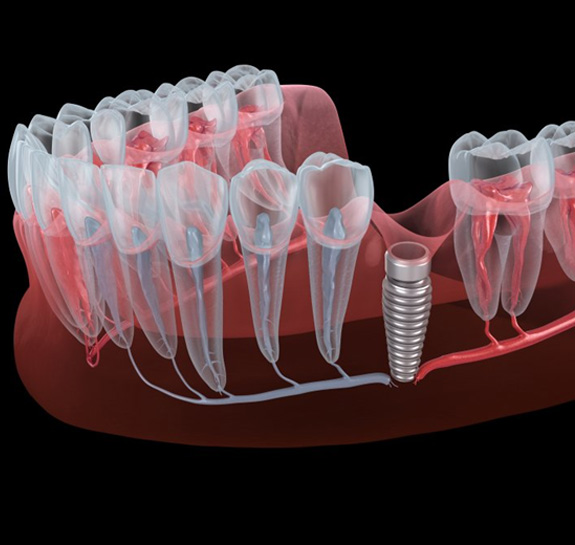
With proper cleaning and maintenance, smart eating decisions, regular dental checkups, and mindful chewing habits, an implant can last for several decades. However, your appliance can be compromised due to:
- Injury: Blows to the face or mouth or chronic stress due to grinding or aggressive chewing can work an implant loose from the jawbone.
- Failed osseointegration: Dental implants are designed to fuse with the jawbone’s structure to create a sturdy foundation. If your device does not adequately bond with your jaw, it will probably not be able to work properly.
- Peri-implantitis: If the gum tissue or jawbone structure supporting an implant is eroded by infection, the device may break loose.
Symptoms of Failed Dental Implants

Dental implants can potentially fail at any time, so it’s important to pay attention to your restoration in case it starts showing troubling symptoms like:
- Looseness: Your dental implant should remain secure in its position. Contact our office if you notice the restoration is loose on its post or the implant is loose in the gum tissue.
- Pain: Oral infections that can compromise a dental implant can be quite painful.
- Gum recession: If the gum tissue is pulling away from your dental implant, you may have an oral infection that needs to be addressed.
- Changes in bite alignment: A compromised dental implant may change how your teeth come together.
- Trouble eating: An implant that isn’t functioning properly may make chewing difficult.
- Swollen or inflamed gum tissue: Advanced gum infections called periodontitis can lead to implant failure.
How Dental Implant Salvage Works

It’s best to address signs of impending dental implant failure early to prevent worsening damage, so please contact our office as soon as possible if you are concerned that your device isn’t working properly. We may be able to address oral infections with gum disease therapy or treat the appliance to encourage it to reintegrate with the jawbone. In some cases, it will be necessary to replace the appliance entirely.