
Traditional Braces – Raleigh, NC
The Standard Method for Straightening Smiles
You might think of having crooked teeth as ‘just’ an aesthetic concern, but the truth is that tooth and bite misalignments can also affect your oral health. For instance, it’s harder to clean teeth that are gapped or overlap, increasing the risk of cavities and gum disease.
Traditional braces are the standard method for straightening smiles, and fortunately, our team in Raleigh has the qualifications and technology to offer this tried-and-true treatment. Continue reading to learn more about this service and how it works!
Why Choose Dalton Hunt Dentistry for Traditional Braces?
- Member of The American Orthodontic Society
- Advanced Technology for Improved Comfort & Accuracy
- Flexible Financing Available
How Do Traditional Braces Work?
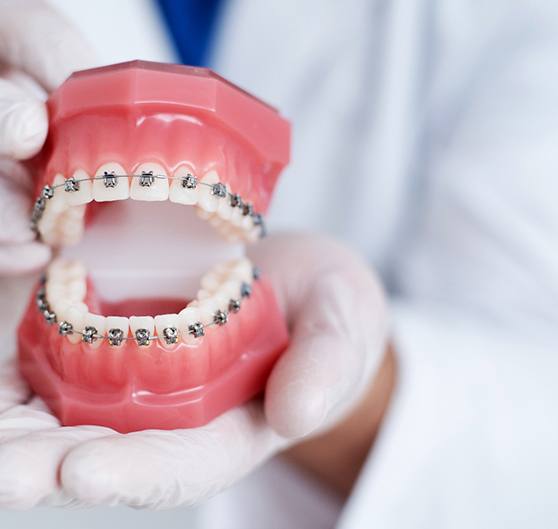
Traditional braces consist of metallic brackets that are attached to the fronts of your enamel. These are threaded with an archwire to apply sufficient tension to shift your teeth or jaw into their ideal positions.
You’ll be required to schedule periodic follow-up visits every six to eight weeks so our team can monitor your progress and adjust the wire tension as needed to keep your smile on track.
What Orthodontic Issues Can Braces Fix?
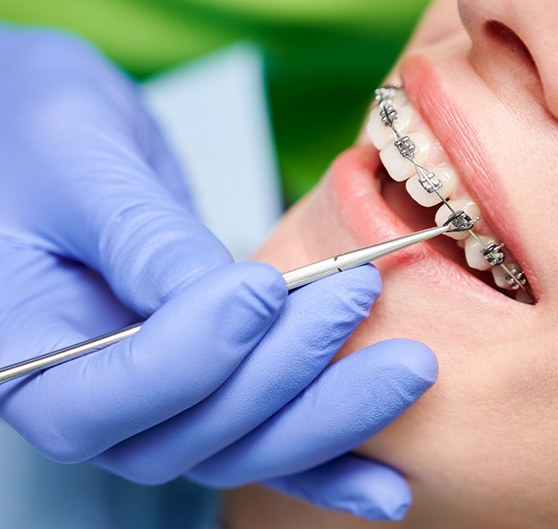
This standard solution has a long history of successfully straightening even the most severe bite and dental misalignments, but that doesn’t mean it’s the best way to meet everyone’s unique needs.
Before proceeding, you must schedule a consultation with our team so we can examine your condition and determine whether you’re a good candidate. Then, based on our findings, we might recommend braces to address the following types of concerns:
Bite Misalignment
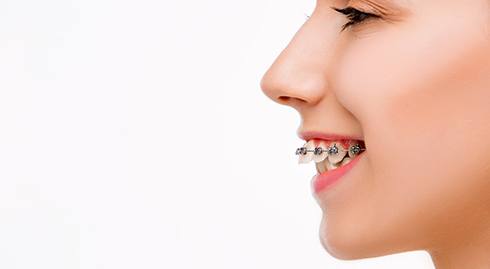
If your upper and lower teeth don’t meet where they should when you bite down, you might wear down your enamel unevenly or prematurely. This can also force your jaw to overwork itself to perform basic functions, like chewing and speaking, which can contribute to TMJ (temporomandibular joint) soreness, stiffness, or disorders.
With the help of bands and other accessories, braces can be used to ease your jawbone into a more proper alignment.
Crowded & Crooked Teeth
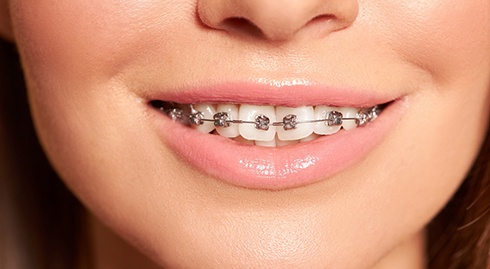
Crooked or overcrowded teeth can make it challenging to reach all their surfaces when brushing and flossing, which can lead to oral issues such as tooth decay or periodontal disease. You might also develop weakened enamel that’s prone to injuries, like chips and cracks.
Traditional orthodontics can pull your teeth to their ideal places and improve your dental health.
Gapped Teeth
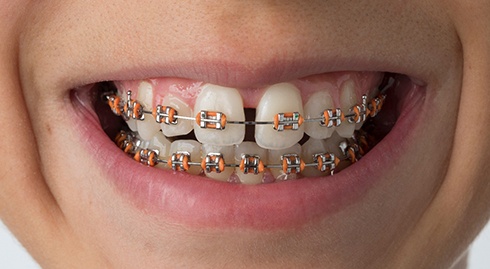
Wider spaces between teeth can trap food and other debris, encouraging unhealthy bacteria in your mouth to form plaque and cause dental disease. Thankfully, braces can close the gaps to help you maintain a beautiful, healthy smile.
Caring for Your Braces
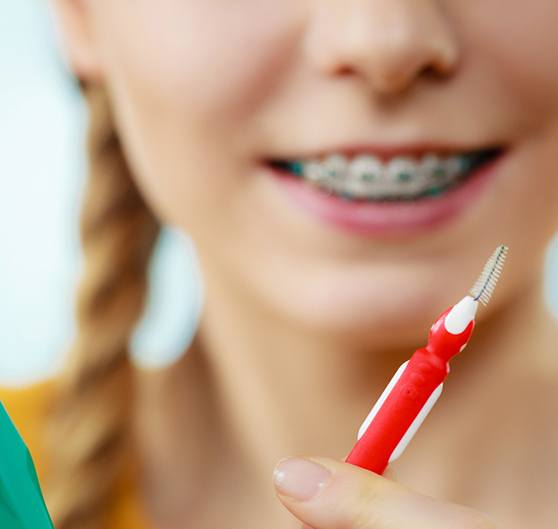
Your orthodontics will be attached to your enamel throughout your treatment, and proper care is vital to avoiding potential complications. You can help maintain them by:
- Cleaning them consistently. You should brush and floss twice daily to remove harmful residue that causes cavities and gum disease. You might require special interproximal brushes or a water flosser to reach around the brackets and wires.
- Choose foods carefully. Our team will provide a list of foods to avoid, like anything too hard, crunchy, or sticky, that could damage or dislodge a bracket or snap a wire.
- Schedule routine visits. You’ll be expected to see our team periodically to check in on your treatment progress and adjust the tension of the wires as necessary.
Traditional Braces FAQs
Do Traditional Braces Hurt?
Many patients in Raleigh who are eager to straighten their smiles hesitate to get traditional braces because they’re scared their treatment might hurt. It’s only natural to want to avoid potential aches, but the truth is that any service that exerts enough pressure over your teeth to shift them in your mouth has the potential to cause some type of discomfort, and this option is no exception.
It’s normal to feel sore for a while after your braces are first attached, and then again after tension adjustments are made periodically to the arch wire. It’s often safe to take over-the-counter medications, like acetaminophen or ibuprofen, to reduce symptoms. If the brackets or wires dig into the soft tissues in your mouth, you can minimize contact by placing special orthodontic wax to smooth hard edges.
How Long Do Traditional Braces Take?
This treatment typically takes somewhere between one and three years to complete, though the exact timespan for your orthodontics can depend significantly on your unique circumstances.
Some factors that can potentially affect how long it takes to straighten your smile can include:
- Your age. Teenagers whose jaws are not yet fully set often complete standard orthodontics faster than older adults because their teeth can move more easily and rapidly in their mouths.
- Severity of your condition. More progressive dental or bite misalignments often take longer to correct because teeth have farther to travel.
- Treatment compliance. Wearing bands as directed, brushing and flossing regularly, avoiding certain foods, and following other instructions can help you stay on track with your anticipated treatment timeline.
Can I Get Traditional Braces on A Single Arch?
If you only have a few crooked teeth in just your top or bottom row, you might wonder whether braces are required on both your arches. There may be circumstances in which our providers might approve such single-arch service, but it’s usually not recommended.
This is because your upper and lower teeth must touch correctly in certain places to maintain a proper bite, and straightening just one row of teeth might cause a misalignment, such as an overbite, underbite, or crossbite, or contribute to TMJ (temporomandibular joint) aches or disorders. In most cases, it’s best to treat both arches at the same time for optimal results.
Am I Too Old for Traditional Braces?
Getting braces as a youth or teen has become so commonplace that many consider it a right of passage into adulthood. However, even those who had perfectly straight teeth their entire lives might eventually find that daily wear and tear has finally pushed them out of their ideal places later in life.
Some older patients worry it’s too late to straighten their smiles, but the truth is that there’s no age restriction or limitation on getting braces. Typically, candidacy is determined on a case-by-case basis, and though it may take adults with more firmly rooted teeth longer to achieve their smile goals, they can often still undergo this treatment successfully.